




Point of views revealed in Sight posts are entirely those of the writers.
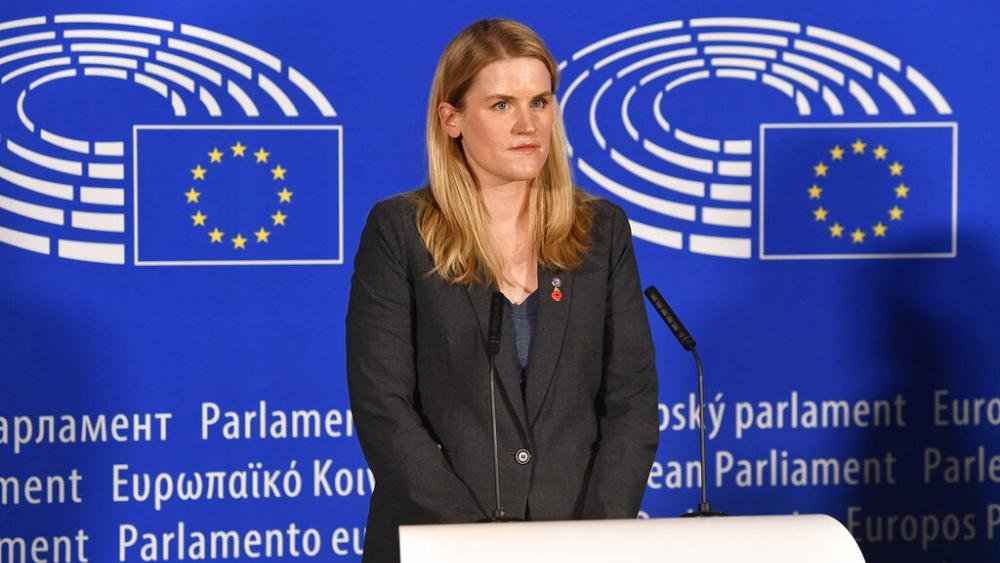
The current testament of Facebook whistleblower Francis Haugen in the European Parliament has actually subjected the EU’s objection to reclaim control of the electronic ball.
Ms Haugen’s worrying discoveries reveal the level to which Big Technology is placing revenue prior to the general public passion, as well as exactly how it is harming for all of us.
Yet regardless of this, upcoming regulation, in the kind of the EU’s Digital Markets Act as well as Digital Solutions Act, does not have the passion required to attend to these troubles.
MEPs have the power to establish worldwide requirements as well as form the electronic future according to essential legal rights as well as worths, yet a bulk appears unwilling to possess it.
The defend personal privacy
In her speech, Haugen cautioned of the level to which Meta/Facebook’s digital truth strategies– which require a harmful reproduction of sensing units in structures– will significantly boost the danger to our personal privacy postured by security industrialism.
Sensing units in our residences as well as offices can come to be as crucial as cams as well as microphones presently are. Yet they can additionally offer business like Meta/Facebook consistent, unlimited accessibility to our individual lives.
Despite Haugen’s cautions, the suggested European electronic regulation stops working to protect a right to privacy for residents as well as stops working to secure us from having each one of our activities videotaped as well as made use of to adjust us.
Taking apart censorship devices
Haugen cautioned that Facebook’s unstable upload filters over-block substantial quantities of beneficial lawful web content, such as on counter-terrorism due to the fact that they do not recognize the definition, purpose and/or context of details.
It is crucial that we prohibit these error-prone censorship devices. As well as yet, as it presently stands, the upcoming Digital Solutions Act would certainly not rule them out!
These filters interfere with crucial media web content, political speech, clinical discussion as well as instructional product, typically overmuch impacting minorities as well as political lobbyists.
Dealing with poisonous formulas
Haugen’s testament confirms that Facebook maintains focusing on revenue over the general public excellent. Yet the EU remains to hide its head in the sand, misguiding itself that it can require Huge Technology to go after a public passion schedule as well as repair troubles on its own, depending on a supposed “risk-based method”.
This is naïve at ideal. Huge Technology’s just real commitment is to its investors, its only goal is extra interaction, even more usage, even more advertisements, even more information, even more revenue.
That revenue is driven by poisonous recommender formulas. These formulas– which advertise devastating, severe web content in a mission for even more clicks– are substantial, elaborate, intricate black boxes.
No person has duty over them, extremely couple of individuals understand exactly how they operate at all, as well as they are close to difficult to audit.
This suggests we would certainly need to trust fund business to make modifications to their formulas that would certainly lower their revenue: something they will certainly never ever do willingly.
A lot of the extreme social problems we are dealing with today are triggered, or made substantially even worse, by these formulas. From anti-vaxxers to conspiracy theory philosophers, the Myanmar genocide to the United States Capitol strikes, they have actually fed one of the most prone residents one of the most severe web content, as well as every person has actually paid the cost, some with their lives.
The only genuine method to handle the technology business’ poisonous recommender formulas is to enable individuals to change them off, as well as either sight messages by day, or make use of exterior formulas of their option rather, such as non-commercial area ones.
Providing residents extra option online
Despite having clear, exterior formulas, individuals still have little option yet to turn over their information to Meta/Facebook in order to interact with those near them.
As Ms Haugen stated, Meta/Facebook has a near-monopoly on individual social media networks, as well as network lock-in suggests that if you wish to change, you would certainly need to encourage every person to change with you.
The only efficient method to handle the technology business’ misuse of market prominence is interoperability: enabling individuals to change to different systems as well as still interact with their buddies as well as coworkers throughout systems.
Yet in its recently-adopted placement on the Digital Markets Act, the European Parliament’s lead board stops working to ask for compulsory interoperability.
Selecting a future
Think of a future where we can really feel risk-free concerning our information as well as personal privacy, in the house as well as at the office. A future where lawful web content isn’t frequently censored, where independent web content designers can quickly expand, where severe as well as destructive web content is left on the edges where it belongs, as well as where residents can select a social media similarly you can select an e-mail carrier, understanding that no matter that they join, they can get to any individual.
Such a future is feasible. Yet just if we have the political will to place individuals as well as our autonomous establishments in control of the electronic ball, instead of remaining to trust fund international companies to form the electronic age we as well as our kids will certainly stay in.
Ahead of essential ballots as well as choices, there is still time for the general public to get in touch with policymakers to basically transform the guidelines of the video game, as well as allow residents as well as public establishments reclaim control.
Patrick Breyer is an electronic legal rights lobbyist, participant of the Pirate Event Germany as well as an MEP given that 2019. He presently works as the EU Board on Civil Liberties’ rapporteur for the prepared Digital Solutions Act.


