


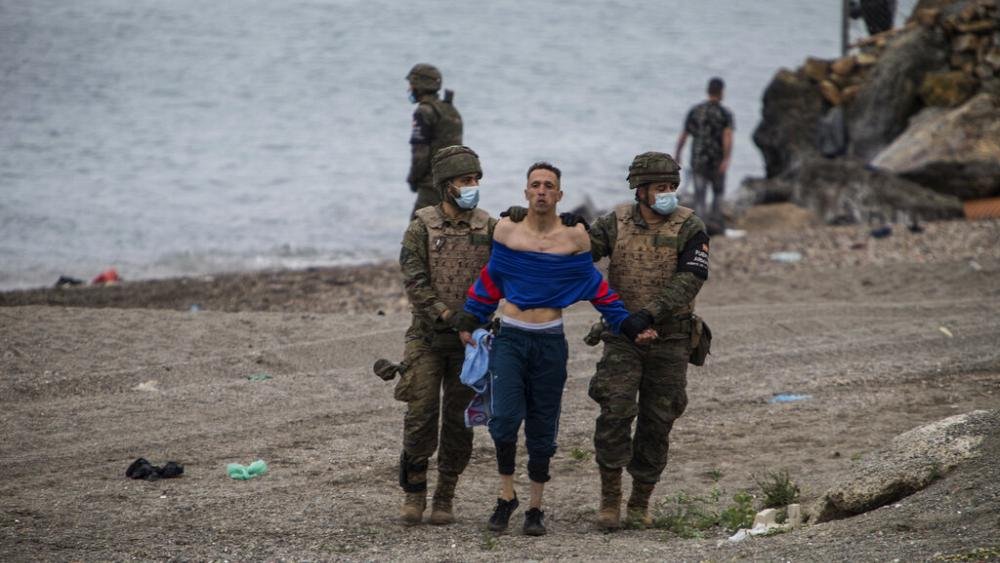
Around 6,000 migrants from Morocco arrived in the Spanish enclave of Ceuta between Monday and Tuesday amid a tense diplomatic standoff between Madrid and Rabat.
Boats crammed with men, women, and children made the crossing into Spanish territory while many others swam or even paddled across the border.
At least 1,500 of those that have crossed into Ceuta, a city of 85,000 that is separated from Morocco by a 10-metre fence, are believed to be teenagers.
Authorities say that the crossings began at 2 am on Monday in the border area of Ceuta known as Benzú and were then followed by a few dozen people near the eastern beach of Tarajal.
The daylight didn’t stop the crossings, as entire families with children, swam or boarded inflatable boats, said the spokesman. The influx continued on Tuesday, although in lower numbers.
The migrants were checked by Red Cross medics before being taken to a reception centre, where they were detained, a police spokesman said on Monday.
Last month, around 100 migrants swam to Ceuta in groups of 20 to 30. Most were deported back to Morocco.
The Spanish enclaves of Ceuta and Melilla have the European Union’s only land borders with Africa, making them popular entry points for migrants seeking a better life in Europe.
Migrants try to reach the enclaves either by swimming along the coast or climbing the tall border fences that separate them from Morocco.
The wave of arrivals came at a point of tension between Madrid and Rabat over the presence in Spain of the leader of the Western Sahara independence movement.
Rabat reacted angrily after it emerged that the leader of the Polisario Front, Brahim Ghali, has been treated at a hospital in Spain for COVID-19 since mid-April.
The Polisario Front has long fought for the independence of Western Sahara from Morocco.
Asked by reporters whether Morocco was relaxing controls on departing migrants, Spain’s foreign minister simply said she had no information.
Blanca Garcés, a senior researcher at the Barcelona Centre for International Affairs, says one of the questions raised by the arrival of the migrants is where were the Moroccan police?
“There are many witnesses who explained that the police were not there anymore, trying to stop them. And this, of course, has to do with the tension between the Moroccan government and the Spanish government,” she explains. “It’s using the migration card is used as blackmail, as a way to put pressure upon the member states. In this case, the Spanish government.”


