



Ursula von der Leyen has actually pitched a brand-new device to aid the EU capture up in the ever-frantic technical race: a European Chips Act.
The act has actually not been officially offered yet, however the European Payment Head of state utilized her yearly State of the Union speech to make her purposes clear: the EU has to produce a “cutting edge European chip environment”, consisting of manufacturing, to assure protected as well as secure supply chains.
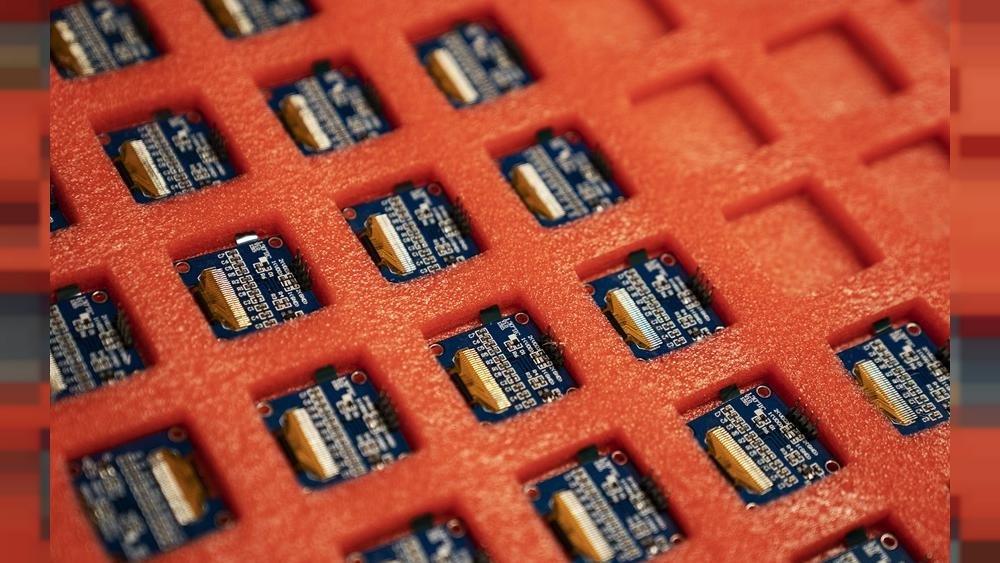
Integrated circuits, likewise referred to as semiconductors, are the crucial element behind countless digital tools existing in our every day life, such as smart devices, computer systems, cams, tvs as well as cleaning makers.
As the globe comes to be progressively digitalised as well as tech-dependent, semiconductors develop into very lucrative, useful as well as sought after items that all nations as well as firms wish for. Chips have actually come to be such irreplaceable as well as delicate gizmos they are currently translucented the lenses of nationwide safety as well as geopolitics.
The pandemic has actually dropped even more light on the value of semiconductors. Supply chain interruptions triggered by the infection, paired with an abrupt financial healing as well as continuous profession stress, have actually set off a worldwide lack of chips.
Business like Samsung, Toyota, Sony, Ford as well as Volkswagen have actually seen their manufacturing chains impacted by the serious deficiency, which remains to now.
The issue has actually likewise struck Europe, providing added catalyst to the discussion around the bloc’s tactical freedom, a freely specified idea that supporters for an autonomous, self-dependent European Union.
Innovation freedom is just one of the major goals for advocates of tactical freedom. While the EU has actually taken the lead in electronic policy, its production ability, financial investment circulations as well as technology degrees still drag the USA as well as China.
According to the US-based Semiconductor Sector Organization (SIA), worldwide semiconductor market sales totaled up to $439 billion (EUR373 billion) in 2020, a boost of 6.5% contrasted to 2019. Yet while sales expanded progressively in China, Japan as well as various other nations in the Asia Pacific area, numbers really stopped by 6 percent in Europe– an uneasy sign provided the thriving need.
Semi-conductors “is an area where Europe had a great deal of management. Yet while globally need is expanding, the manufacturing in Europe is lowering”, Head of state von der Leyen informed Euronews after her State of the Union speech, describing the continent’s diminishing market share.
Throughout the 1990s, the EU regulated over 40 percent of the chips market. By 2020, the number was up to 24 percent. Today, the bloc hardly gets to 10 percent of the complete manufacturing.
Conscious of the sheer autumn, the EU intends to transform the web page as well as double this number so it can catch 20 percent of the marketplace of semiconductors (by worth) prior to completion of the years. Brussels thinks conference this target will certainly suffice to please most needs of its residential market.
Yet producing semiconductors is a complicated, pricey as well as fragile procedure that needs really details, as well as typically unusual, products as well as a fastidiously exact manufacturing chain. The expense of developing a brand-new semiconductor manufacture plant from scratch can have a cost of approximately $4 billion.
” We truly need to act. We need to draw our pressures with each other. Which’s what we are mosting likely to perform with the European Chips Act that we are mosting likely to advance [and] bring all the stakeholders with each other,” von der Leyen informed Euronews.
” We have, for instance, impressive study with IMEC in Belgium. We have the equipment as well as we have the manufacturing. The value is currently to truly pack our pressures, scale-up as well as to improve because area due to the fact that semi-conductors are vital for the competition as well as likewise the freedom of our solitary market.”
Taking Advantage Of the EU’s premium study
The semiconductor market is presently controlled by Taiwan in a practically monopolistic setting, using up over 60% of sales in 2020. The gigantic Taiwan Semiconductor Production Business (TSMC) make up greater than 50% of all sales as well as offers customers like Apple, Qualcomm as well as Nvidia. South Korea’ Samsung holds over 17% of the marketplace, leaving a little portion for various other rivals like China, Singapore, the United States as well as the EU.
Taiwan’s leading setting is such that an extraordinary dry spell in the nation is attributed with worsening the continuous worldwide lack.
An upgraded market technique offered previously this year by the Payment currently highlighted semiconductors as one of the 137 items where the EU is “very reliant” on outside markets.
Concrete information concerning the European Chips Act are up until now restricted. The proposition isn’t included in the Payment’s job program for 2021, hinting the record will certainly be introduced at some point following year.
In a LinkedIn message released soon after the State of the Union address, Thierry Breton, European Commissioner for the interior market, shared his sight on exactly how the European Chips Act must be structured. “The race for the most sophisticated chips is a race around technical as well as commercial management,” he claimed, emphasizing the EU “can not as well as will certainly not drag”.
Initially, he composed, the act ought to consist of a technique to take advantage of the EU’s major toughness: its study ability. The commissioner discussed 3 popular centres– IMEC in Belgium, LETI/CEA in France as well as Fraunhofer in Germany– as instances of “premium study”.
The Payment approximates that European study is 3 to 5 years in advance of the remainder of the globe in regards to essential study in chips.
Second of all, Breton said, the act ought to set out “a cumulative strategy to boost European manufacturing ability” to keep track of supply chains, expect feasible interruptions (like the here and now lack) as well as sustain the advancement of manufacture plants (supposed “fabs”) throughout the bloc. These plants must be concentrated on one of the most sophisticated kind of semiconductors (those determining 2 nanometres or listed below).
When it involves chips, dimension really matters: as chips obtain smaller sized, they obtain faster as well as take in much less electrical power. The present market requirement is 7 nanometres.
Ultimately, Breton claimed, the European Chips Act must offer a structure for global teamwork to branch out supply chains as well as “lower over-dependence on a solitary nation or area”, a very finely veiled recommendation to Taiwan’s supremacy.
” The suggestion is not to generate whatever on our very own below in Europe,” he confesses.
The Payment strategies to develop the European Chips Act making use of the just recently released European Partnership on Semiconductors. The exec has actually currently implemented 3 commercial partnerships, been experts in batteries, basic materials as well as hydrogen. These organisations are created to congregate exclusive capitalists, startups as well as SMEs to go over brand-new organization collaborations as well as designs.
The European Battery Partnership is thought about one of the most effective of the existing triad, having actually drawn in some 440 stars as well as around EUR100 billion in financial investment dedications.
Von der Leyen’s pitch for a European Chips Act can be found in the heels of a comparable effort in the USA, a nation that likewise dislikes its tiny share of the marketplace. In 2015, a bipartisan team of legislators offered Congress a proposition for a CHIPS for America Show the objective of channeling $52 billion right into the manufacturing of American-made semiconductors.


