




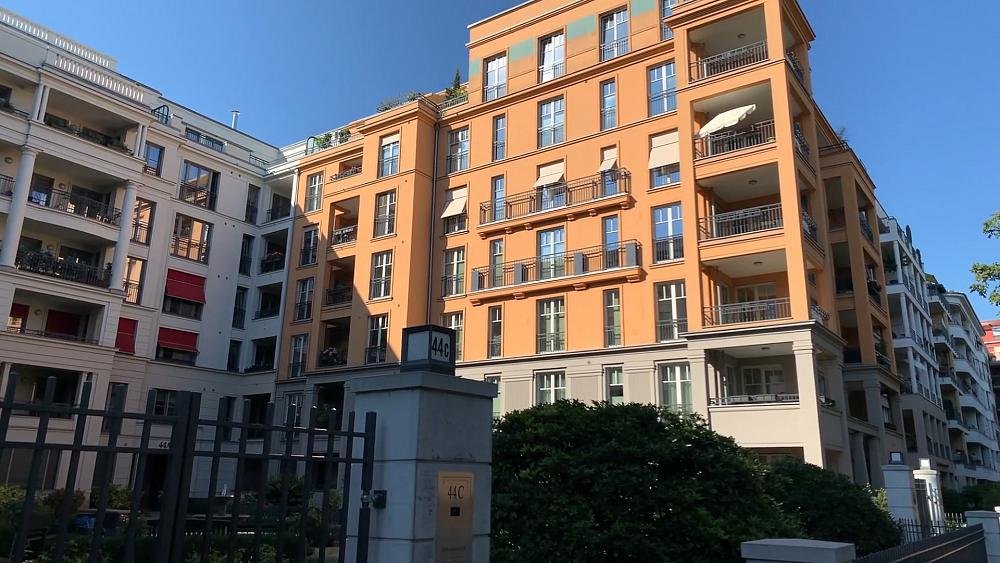
The German resources is rupturing at the joints. Greater than 80 percent of Berlin’s 3.7 million homeowners lease their residences. However the city’s attraction to financiers, the architectural absence of real estate and also the arrival of some 350,000 individuals in the last years have actually sent out rental costs escalating.
At a demo in main Berlin, 2 weeks in advance of government political elections, militants were requiring, to name a few points, an across the country rental fee freeze and also the building of brand-new social and also budget-friendly real estate. One young demonstrator in her 20s informed euronews that she believes “it is very important that individuals can pay for to reside in Berlin which individuals aren’t pressed out”.
Various other militants repeat this idea and also an additional repeating debate listened to at the presentation consists of the high expense of living and also stationary salaries.
Lease cap thrown away
Berlin’s city government tried in 2014 to ice up rental fees for 5 years, with its “Mietendeckel” or rent out cap. Nonetheless, Germany’s constitutional court regulationed in April that the cap broke the constitution, stating that rental fee law hinges on the hands of the federal government and also not the local state.
As rental fees remain to raise, the Berlin Renters’ organization claims the expanding void in between abundant and also bad is likewise being worsened on the real estate market.
” Real estate has currently end up being a threat of destitution,” claims Rainer Wild, president of the Berlin Renters Organization. “The standard issue is that individuals aren’t all on the exact same income, however have really various earnings. As well as in the meanwhile, houses with below-average earnings carry the ball of real estate expenses of 50% or even more.”
Berlin rental fees presently set you back anywhere in between 5.30 euros per square meter for pre-fabricated “Plattenbau” houses to a minimum of 13 euros per square meter from remodelled pre-war structures and also high-end brand-new builds.
Competitors for houses is likewise high. In January this year, approximately 214 Berliners were completing for one house. Lengthy lines up of potential tenants are still an usual view outside house obstructs where watchings are occurring.
Expropriation vote
However it’s the sale of countless state-owned houses to business property managers in the late 90s and also very early 2000s that’s commonly viewed as among the most significant contributing elements to Berlin’s real estate situation.
” This is a trouble that, for numerous years, we have actually been attempting to not just to quit, however likewise to combat with the remunicipalisation of several of the home. We have actually plainly revealed throughout this legal duration that this is feasible,” claims Berlin State Assistant for real estate, Wenke Christoph.
A sell 2019 saw Berlin’s state-owned real estate firm Gewobag redeem 6,000 Berlin houses developed as social real estate in between the 60s and also 90s. The EUR920 million buy-back from Luxembourg realty firm Trouble Characteristic was the greatest largest home renationalisation initiative ever before seen in the German resources.
However the effort “Expropriate Deutsche Wohnen & & Co. “( Deutsche Wohnen & & Co. enteignen) intends to see even more.
Previously this year, the effort gathered 183,711 request trademarks– greater than the called for 172,000– to hold a vote on the feasible expropriation. The request requires the expropriation of greater than 240,000 residences which presently come from significant home firms– especially those with greater than 3,000 houses in their profiles.
” The appropriate lawful term of what we’re attempting to do is socialisation,” claims Joanna Kusiak, a study other in metropolitan researches at the College of Cambridge, and also “Expropriate Deutsche Wohnen & & Carbon monoxide” lobbyist.
” This suggests, without a doubt, that this home needs to be eliminated from large companies, however likewise that a brand-new kind of public establishment need to be developed to handle this real estate in an autonomous method.”
On September 26th, Berliners will certainly have the possibility to elect on the controversial vote. While not legitimately binding, the hope is to place political stress on Berlin.
In the meanwhile, brand-new residences are being developed– regardless of problems as a result of the slow-moving handling of structure authorizations, along with the increase in expenses of structure products. The city-state’s division for city growth and also real estate determined that some 200,000 brand-new houses required to be developed in between 2017 and also 2030 to satisfy the requirement for living area.
In the northwestern area of Berlin-Tegel, nonetheless, Heinz-Jürgen Korte and also his next-door neighbors are stressed over the strategies of financiers that acquired the land they survive to construct costly condos.
” We wish to maintain our bike workshop right here. We wish to maintain the website and also, naturally, we wish to proceed living right here,” claims Korte. “That does not indicate that building is not enabled right here, Berlin requires apartments. However we’re dedicated to community-oriented and also social growth for the home and also growth with audio reasoning.”
In the meantime, the structure intend on the land have ground to a stop. However homeowners are worried regarding that will certainly attempt following.
Across the country issue
The absence of real estate and also increasing rental fees is influencing German cities past the resources, with around 670,000 houses doing not have across the country. Besides Berlin, significant cities like Stuttgart, Munich, Frankfurt and also Fragrance have actually been especially terribly struck by the real estate lack.
As German citizens head to the surveys on September 26, it will not be just Berliners that will certainly have the assurance of a budget friendly house on their minds.


