


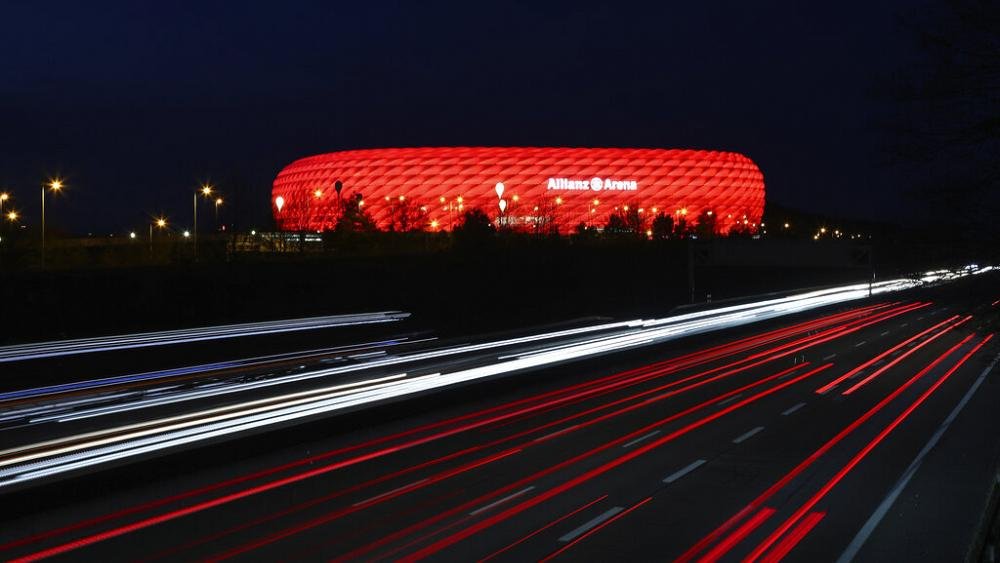
There have been calls by LGBTQ+ groups for a boycott of the ongoing Euro 2020 tournament following UEFA’s decision to halt plans for rainbow-coloured lights to illuminate the Munich’s Allianz Arena when Germany play Hungary on Wednesday.
Campaign and support groups representing LGBTQ+ people are angry at what they see as UEFA’s failure to show a positive example in the fight against discrimination. At least one has called for a boycott of the tournament.
The lights were suggested by Munich’s mayor, Dieter Reiter, who has condemned the decision as “shameful.”
UEFA had been accused of being political over their decision not to allow the lights but the organisation rejected this – suggesting the political intent was on the part of the mayor, not the football association.
Reiter had hoped the colourful display would demonstrate support for LGBTQ+ groups in Hungary following the recent introduction of laws, by Viktor Orbán’s government, which bans gay people from appearing in school material or TV programmes aimed at people under 18.
Despite the backlash UEFA has defended its decision. In a statement it said: “Today, UEFA is proud to wear the colours of the rainbow. It is a symbol that embodies our core values, promoting everything that we believe in – a more just and egalitarian society, tolerant of everyone, regardless of their background, belief or gender.”
Following claims the football body was making a political decision, UEFA turned the accusations on the campaigners.
“Some people have interpreted UEFA’s decision to turn down the city of Munich’s request to illuminate the Munich stadium in rainbow colours for a EURO 2020 match as ‘political’,” a spokesperson said.
“On the contrary, the request itself was political, linked to the Hungarian football team’s presence in the stadium for this evening’s match with Germany.”
Campaigners hit back at UEFA stance
But activists are not impressed. “UEFA’s decision to ban the display of rainbow colours on the facade of the Allianz arena in Munich sends a dangerous signal to the queer community around Europe”, said Markus Haselbeck, from the Munich-based youth organisation, ‘diversity München’.
“While depicting themselves as open and fighting for equality through their EqualGame initiative, UEFA seemingly only adopts this attitude toward certain groups of people and within only a few countries throughout Europe, thereby excluding queer people and young queer people in particular from an equal treatment within their country and in football.”
Haselbeck suggested UEFA was failing in its responsibility to be more inclusive.
“Their whole idea of ‘EqualGame’ thereby is turned upside down, providing an equal game only for a lucky few outside of countries like Hungary or Poland and the many other countries that deny LGBTIAQ* people their rights,” he said.
However UEFA reiterated that it embraced the principles of the rainbow flag but avoided its politicisation. “For UEFA, the rainbow is not a political symbol, but a sign of our firm commitment to a more diverse and inclusive society,” the statement said.
Hungarian Prime Minister, Viktor Orbán announced that he would not attend his country’s match with Germany amid the focus being placed on LGBTQ+ rights in his country. But some players have announced their intention to continue the campaign; including Germany goalkeeper Manuel Neuer who say he will play with an armband in the same colours.
Groups outside Germany have also rallied support against UEFA’s decision. Evelyne Paradis, Executive Director of ILGA-Europe, said it was important for activist not to be deterred by the move.
Paradis told Euronews: “Illuminating a football stadium in the rainbow colours is only helpful for the LGBTI people living in Hungary (the first EU country to introduce Russian-style ‘anti-propaganda’ legislation) if it serves to mobilise political support for action that actually impacts positively on people’s lives.”
No distractions
Paradis also called on other countries to be more determined in their condemnation of Orban’s hardline policies.
“Although we regret the UEFA’s decision, we cannot let the decision distract attention from where it needs to go, i.e. making sure that EU governments back up European Commission’s President Ursula von der Leyen in making sure the Orban government no longer acts in full impunity.”
Haselbeck believes even stronger measures are called for: “The strongest message might be a boycott of the ongoing European championship, since such actions will actively influence UEFA’s income and take away the power they hold,” he said.
“If people continue taking part in the ongoing championship and programmes UEFA offers, they will continue their anti-political and anti-LGBTIAQ* ways while rainbow-washing their name.”
Haselbeck acknowledged that the players may also suffer from such a boycott but suggested it may be the only way to raise awareness of the seriousness of Orban’s policies.
“Banning the display and promotion of our community is not only an attack on queer rights but on human rights!,” he said.
Earlier von der Leyen had said the EU would aim to thwart Hungary’s new law which prohibits sharing content on homosexuality or sex reassignment to people under 18 in school sex education programmes, films or advertisements. The Hungarian government said it was meant to protect children.
“This Hungarian bill is a shame,” von der Leyen said. “This bill clearly discriminates against people based on their sexual orientation. It goes against the fundamental values of the European Union: human dignity, equality and respect for human rights.”
Earlier this month, EU lawmakers threatened to sue the commission if it fails to act against countries like Hungary if they flout democratic standards.


