


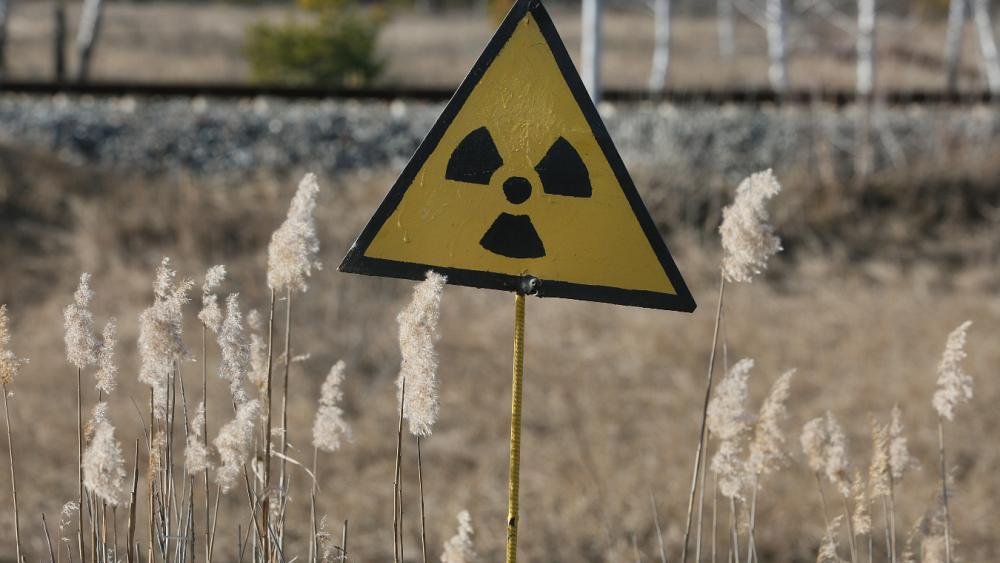
Thirty-five years since the Chernobyl disaster, nuclear power is being phased out, slowly, around the world.
But some countries, especially in the EU, are still reliant on it.
Fourteen of the 27 member states still use it, and some, like France, are particularly hooked.
In 2019, nuclear plants generated around 26.4% of the bloc’s electricity and in France it accounts for more than 70%.
A disaster that shook the world
The explosion and fire that rocked Chernobyl in Ukraine on April 26, 1986, was a warning to the world about the potential danger of using nuclear reactors to create energy.
The collapse of one of the reactors sent radioactive material spewing high into the air, and led to the eventual evacuation of 100,000 people, and a 2,600-square-kilometre exclusion zone around the power plant.
Radiation continued to leak from the reactor building until 2019 when a huge arch-shaped steel structure was built over it.
The UN and WHO reported in 2005 that there had been 4,000 Chernobyl-related deaths, but others put the estimate much higher.
Nuclear being replaced by renewable
Despite its current reliance on nuclear power, the overall number of reactors in operation within the EU is declining.
Today there are only 107 operating reactors across the EU compared to the peak of 135 reached 1989.
“We’re seeing a gradual closure of reactors,” says Antony Froggatt, nuclear energy expert at Chatham House, told Euronews.
“They get closed as they get older, and we’ve not been seeing the construction of new reactors in sufficient numbers to compensate for that.”
The slow speed of construction is one of the reasons for this.
“Taking examples in Europe, the Olkiluoto reactor that’s under construction in Finland is now 12 years late and three times over budget,” Froggat told Euronews.
Nuclear is also being eroded by the advancement of renewable energy, according to the expert.
“Globally, and within the EU, the choice is renewable rather than nuclear,” he said.
“In 2020, for the first time ever, there was more power coming from renewables than there was from fossil fuels.”
“Nuclear power is more expensive than renewable energies,” Froggat said, adding “renewable energies are getting cheaper than fossil fuels.”
Watch the full interview in the above player.


