






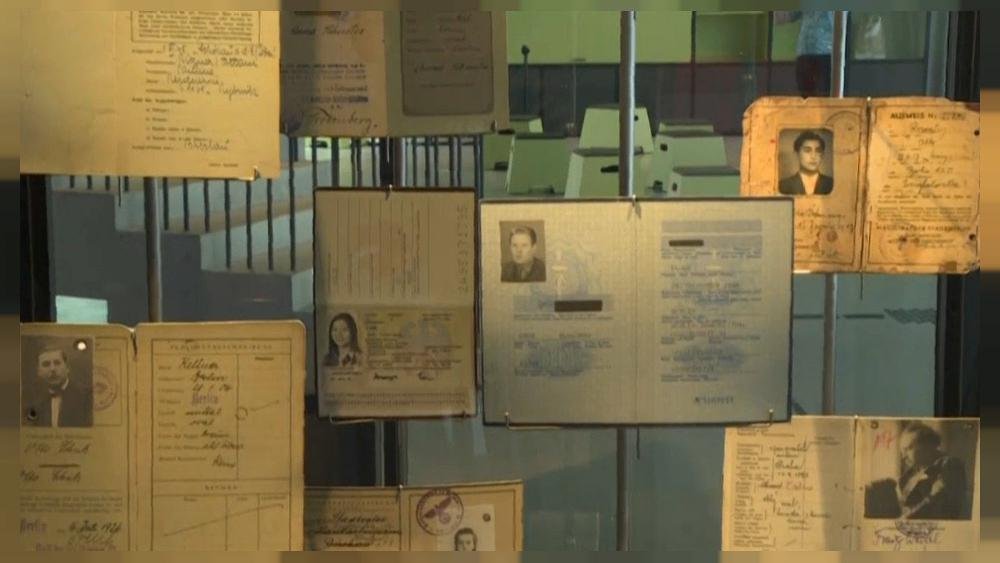
A brand-new gallery committed to the often-silent injury of German private citizens compelled to leave Eastern Europe at the end of The second world war opens up following week after years of warmed dispute.
Possibly showing what its creators call their fragile “harmonizing act”, the brand-new organization in Berlin brings the unwieldy name of Documents Centre for Variation, Expulsion as well as Settlement.
In Between 1944 as well as 1950, some 14 million Germans left or were expelled from today” s Poland, Russia, the Czech Republic, Hungary, the Baltic states, Romania, Slovakia as well as the previous Yugoslavia.
Running away the Russian military as well as later on pressed out by inhabiting powers as well as neighborhood authorities, an approximated 600,000 Germans shed their lives on the trip.
The displaced millions consisted of individuals that had actually resolved in Nazi-occupied areas in addition to ethnic Germans that had actually lived for centuries as minorities in various other nations.
Seventy-six years after the dispute’s end, supervisor Gundula Bavendamm claimed Germany was lastly all set to speak about the suffering of several of its very own individuals, while still recognizing the unmatched criminal activities dedicated by the Nazis.
” We are not the only nation that required rather time to confront uncomfortable as well as tough phases of its very own background,” she informed press reporters at a sneak peek of the gallery prior to it available to the general public on Wednesday. “In some cases it takes a number of generations, as well as the ideal political constellations.”
Antiques from mass German exodus along with modern artefacts
The 65-million-euro gallery goes to discomforts to position the Germans’ circumstances securely in the context of Hitler’s expansionist, genocidal plans.
It lies in between the gallery at the previous Gestapo head office as well as the damages of the Anhalter train terminal, where Jews were sent out to the Theresienstadt prisoner-of-war camp.
Simply contrary is an organized Expatriation Gallery committed to those that left Nazi Germany. An approximated one-third of Germans have household connections to the mass exodus at the battle’s end.
The gallery provides frequently touching household antiques going back to this duration. A haunting cross sew with a rhyme regarding kitchen area cleanliness hangs incomplete, a dark string still hanging from the fabric due to the fact that the lady servicing it instantly needed to range from progressing Soviet soldiers.
A lady’s natural leather bag is noted with her old address in Fraustadt, currently the Polish community of Wschowa: Adolf Hitler Strasse 36. It is presented in a situation near a well-thumbed Hebrew thesaurus.
Keys from a rental property in Koenigsberg – today’s Kaliningrad – that was abandoned in 1945, put along with those from a home in Aleppo, Syria that was deserted throughout the civil battle in 2015, symbolize the long-lasting hope of returning house someday.
” Whatever you see presented below is a wonder due to the fact that it endured the trip,” Bavendamm claimed.
The around 12.5 million individuals that made it to what would certainly come to be East as well as West Germany in addition to Austria frequently encountered discrimination as well as hostility heading.
Currently years on, the gallery’s collection provides help to households wanting to backtrack their forefathers’ odyssey. Somewhere else, a “Area of Tranquility” permits site visitors to rest as well as review tough memories.
Years planned
A shadow of silence as well as embarassment long covered the suffering experienced by German private citizens throughout as well as after the battle.
Teams standing for those removed in the post-war duration in some cases had web links to the much right, as well as periodically upset versus federal government initiatives to compensate Nazi aggressiveness.
Just after the Cold Battle as well as a lengthy procedure of worldwide settlement did events such as the damaging Allied firebombing of Dresden, or the 1945 sinking of the Wilhelm Gustloff ship bring German evacuees, happened discussed.
The much right’s efforts to co-opt such occasions to underscore ideas of German victimhood likewise challenging initiatives to discover the right, conciliatory tone.
Der Spiegel has actually called the gallery “a declaration to the left as well as the conservative, to Germany as well as abroad. It is suggested to shut a last continuing to be space in German remembrance”.
The seeds for the task were initial grown in 1999 by Erika Steinbach, an archconservative legislator that had actually elected versus the acknowledgment of Germany’s postwar boundary with Poland after the autumn of the Iron Drape.
A notorious Polish publication cover shown Steinbach as a Nazi dominatrix requiring Germany’s chancellor at the time, Gerhard Schroeder, to do her bidding process.
Nonetheless, Schroeder’s follower Angela Merkel identified the need of the gallery – albeit for various factors. In 2008 Merkel concurred with wide mainstream assistance to develop a centre committed to a spirit of worldwide settlement.
Chroniclers from throughout Europe as well as Jewish area reps were gotten as consultants.


