






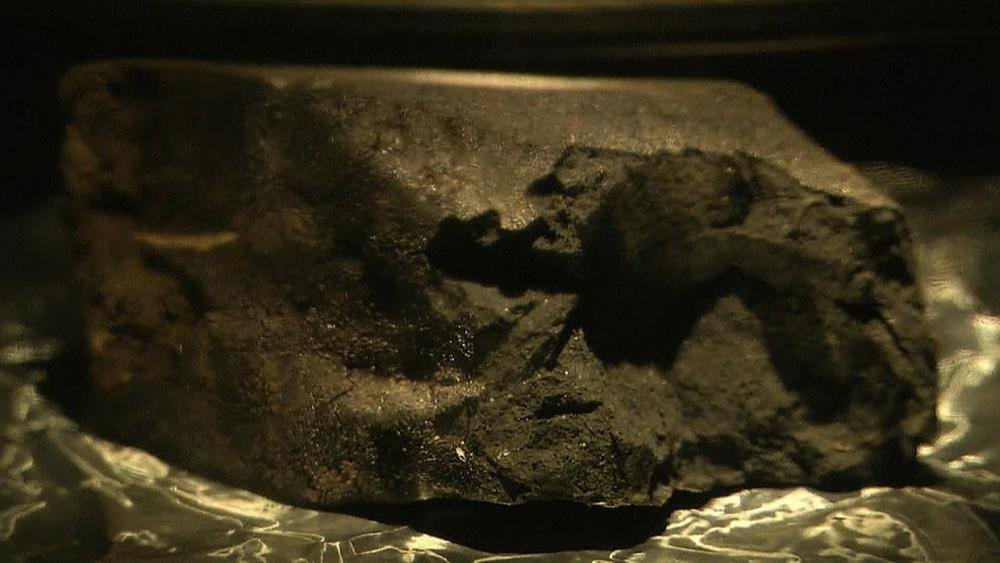
A 4.5 billion year-old fragment of debris that hurtled to Earth from the outer reaches of our solar system has gone on display at the Natural History Museum, London.
Called the Winchcombe Meteorite after the small English market town it crash-landed in in February, scientists say this type of meteorite is incredibly rare.
Footage of its arrival on February 28 was captured by Richard Fleet from the UK Meteor Observation Network before landing on driveway of Hannah Wilcock in Winchcombe.
“It was peak lockdown, so I wasn’t really doing anything that evening, funnily enough,” Wilcock told reporters. “And I heard something shatter outside. I had my window open, as I often do of an evening, and lo and behold, if it wasn’t a meteorite.”
The chunk of space debris of a type known as carbonaceous chondrite, some of which contain organics and amino acids: the essential ingredients for life.
Helena Bates, interim curator of meteorites at the Natural History Museum, said: “It’s made up of things like water-bearing minerals, which suggest at some point in its history it was exposed to water.
“Wherever we find water on Earth, we find life. And so, water in our solar system is something we’re really, really interested in. This meteorite might answer some questions about where the water came from.”
London’s Natural History Museum is reopening its doors on Monday after about five months of closure due to coronavirus restrictions.
It is the longest closure in the Museum’s history since the Second World War, and Monday will be the first time the public gets to see the Winchcombe Meteorite.


